Crusader Kings II: AAR Part 5

When we last left of, King Ulitis had died immediately after starting a war for Bryansk, the last of the Romuvan holy sites. While he started out as “The Wise,” apparently he got worse as time went on. I mean, look at that epitaph. So, now we have King Prusas; and, as noted above, he’s a great military leader. He isn’t too bad in the other areas either, but his martial is through the roof. Which is funny, because he’s a fatty. I guess he’s more of a general than a fighter.

Taking advantage of his skills, he starts a war again, for Bryansk (when a ruler dies, any wars they started over personal claims end). This is going along swimmingly, when someone sneaks a snake into his bed and kills him. Should have checked under the sheets there. He lasted a couple weeks over a year. Next up is another fellow named Nomedas. He, however, is a bit of a loser.

Not only were his stats bad to begin with, but he also is infirm. I predict a short reign, but we’ll see. However, one doesn’t need spectacular stats to win wars that were already being won, which he does, which leads to Prussia (and the Romuvan faith) gaining the last holy site. Well, second-to-last, since at some point one of them was inherited by some other kingdom. But this is definitely a start.

Nomedas decides to put all of his remaining efforts into war-fighting, and goes to town. He manages to be successful in most everything, which gains him the very appropriate title of Tenacious. However, being successful while being weak doesn’t paint any less of a target on his back, and one of his dukes challenges him to a duel. Of course Nomedas can’t accept, which isn’t a good mark on his record.

-33 vs 82 personal combat skill? I’m sure that would be fine.

Even though Nomedas is now officially a coward, he still keeps trucking on, keeps on the conquests. The world is going crazy around him, but he’s just going to be fine. Even his queen dies, and he gets a good young one – who he gets pregnant! Alas, his infirmities catch up with him, and he dies after an impressive rule of nine years as an old cripple. Maslaw is the successor.

Maslaw is a mighty man, a smart fellow, and a skilled diplomat on top of it all. He continues with the multi-generational plan to organize the Romuvan faith – conquering territory in the name of religion, regaining holy sites, all that business. He also joins the warrior lodge, as one would expect such a mighty king to do, and quickly moves up the ranks. Alas, at some point the northern (and quite powerful) duchy is either inherited by, or inherits, the kingdom of Pomerania, which not only takes off a huge chunk of the kingdom, but also loses Romuva one of the holy sites. Fortunately the territory is still run by Romuvans, which means the religion’s moral authority doesn’t take a huge hit. Poland eventually either conquers that kingdom, or inherits it, which means Prussia has Poland on three borders, and can’t just conquer the territory back.

To make matters worse, at the relatively young age of 57 Maslaw becomes infirm, a once-mighty warrior brought down to bed. But he doesn’t waste his time: he becomes a renowned poet. And he doesn’t let off leading wars, nor does he stop improving the kingdom. However, his conditions worsen, leaving him totally senile a few years later. This is of course unacceptable, and despite his incredible luck, he’s eventually assassinated by those that want the kingdom to prosper. Before Maslaw was incapacitated, he nominated a good successor in Arelis.

Tales of Zestiria: First Impressions

I’ve put in a few more hours into Tales of Zestiria, and have some thoughts about it. To put it short: mixed reaction, though mostly positive.

I’ll start with the negatives:

  • The combat system is different from other Tales Of games. Much simpler, at least with the normal attacks. It might just be that I’m playing on semi-auto, though; perhaps manual would make things more like normal? But I’m pretty sure I’ve played semi-auto in all games before this, and it wasn’t the same. (But maybe I was playing on manual this whole time, and just don’t remember.)
  • This isn’t really specific to this game, but I’m going to mention it anyways: I hate how the Select/Cancel buttons are reversed between Switch games and other games. I kept messing up when I was playing Switch games, and now that I’m coming back to the standard controller config, it’s messing me up again. I know I could remap the controls (in either case), but I’m not going to give up that easily, dammit!
  • Again, not specific to this game, but not having a screenshot button on the controller is annoying. I have no shots from the first three hours of the game. More specific to this game, the cutscene text auto-advances, so I have to have good timing with screenshots, which is harder when both of my hands are on the controller by default, and under a blanket at that, while my keyboard isn’t.
  • This is a typical jrpg pc port. Or, in other words, poorly done. It’s pretty badly optimized, and I have noticeable framerate drops, despite my good rig. Also, the ingame Vsync just plain doesn’t work – had to use the graphics card settings to get rid of some of the worst screen tearing I’ve ever experienced.
  • The localization is questionable. I really hate it when translators make the dialog more snappy. I know there are times when a straight translation doesn’t work, but you don’t need to completely rewrite 3/4 of the lines. When even a babby-tier Japanese-knower like me can tell so much is wrong, there are problems.
  • The mentor character Lailah mentions that just how everything will turn out depends entirely on the actions and choices of the hero. This implies that the player will have choice in how things proceed. However, this is a Tales Of game, which don’t exactly have a history of player agency in the story, to put it mildly. I seriously doubt that will change with this game. Not that linearity is a problem in itself, but the implication that player story agency might be present is.
  • Sorey looks really weird. I initially thought that was going to be the artsytle, but no, it’s just him. He’s got this tiny head with weird facial proportions. He looks kinda like an alien, to be honest.

And now for the good:

  • The scene where Sorey becomes the Shepherd is probably one of the most epic (in the true sense of the word) “taking the mantle of the hero” scenes in vidya that I’ve seen. It’s properly hyped up, for one – usually that scene just happens with little fanfare (see: Link pulls out the Master Sword in most Zelda games). But here there is a lot of buildup right from the opening narration. Not only that, but there’s a whole crisis surrounding it, with a lot of witnesses – usually this stuff happens when the hero is alone, or with his party only. The music is great for the scene. The stakes are explained (albiet in a melodramatic dialog during the middle of the crisis), and the character is properly heroic. And then resolves the crisis, everyone looking at him carrying the saved person on his shoulder (holy messianic imagery batman!). I know my explanation makes it sound rather overwrought, but trust me, it’s great (in fact, it’s the reason I wanted to make this post). I think the only similar scene that comes close (that I can recall) is Link pulling out the Master Sword in Breath of the Wild, and it’s not particularly close.
  • I actually like all the characters so far, especially the MC. Sorey is without guile, but not naive. He’s perceptive and smart, despite coming off like the foolish protagonist; but he’s not some secret genius either. He’s optimistic without being idealistic. He’s so far making the typical new hero mistakes, alongside the typical youthful male mistakes, but he’s not prideful, and is willing to own up to it. A real breath of fresh air, compared to similar jrpg protagonists (especially in the Tales Of series). Mikleo is a truly good brother character, despite the Elf/Human dynamic.
  • I really, really like the music. Even walking along a path has bombastic orchestral music. Reminds me a lot of FFXII, to be honest. Not quite that good, but with that mindset.
  • The girls are really cute. Shame they aren’t the main characters.

The world they’re building is already pretty not-good – the government is corrupt, the church is corrupt, everything is going to hell. I wonder what the big dramatic Tales Of twist is going to be. I don’t see how they’re going to pull the “angels are really the bad guys!” thing here. And they’re already hinting that the Shepherd business isn’t all it’s made out to be, so I doubt it’s going to be something along those lines (though maybe that’s how it’s going to tie into the sequel). I guess I’ll see.

It’s still technically Blapril until the 9th.

April and May

April turned out to be a more exciting month than I had anticipated. Stuff actually happened. Well, stuff to blog about, at least. Real life stuff didn’t really happen much at all. And not just because of some silly shutdown. But that aside, yah, stuff.

  • Of course we had (still technically have, I suppose) Blapril. What a good way to get back in the saddle for blogging. I made it a goal to write something – anything – every day. And look what happened:
  • Yep, actually got writing every day for a month. That calendar didn’t even look that way with Blaugust. (Part of it was because I didn’t have my blog time set to the correct time zone…) The posts might not have been of the highest quality – I’m not a writer, and I don’t actually write outlines or drafts or any of that stuff proper writers do – but they are there. I didn’t even get blogging fatigue (other sorts of mental fatigue, sure, but not from blogging). I’ll call that a win.
  • I finished a game. An actual game that has an end, and I reached it! Finished Breath of the Wild. Such a good experience, one of the best I’ve had in gaming in a long while.
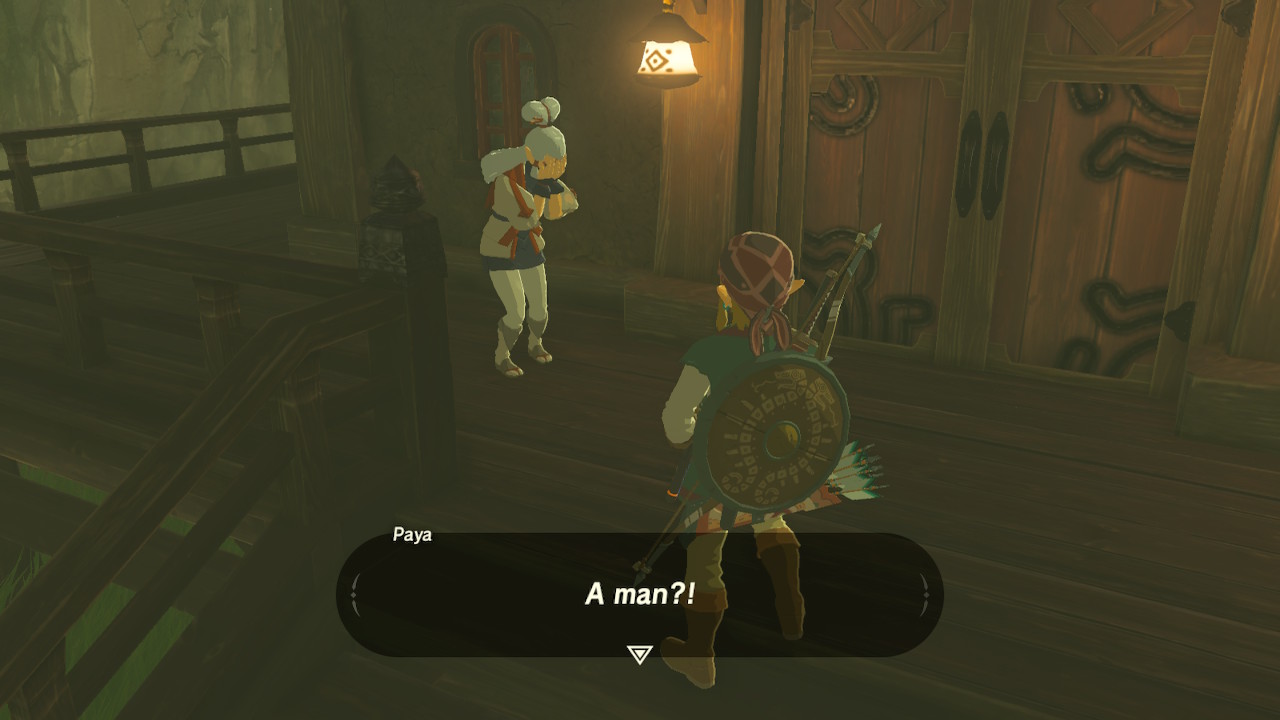
How does Link always get the fish cuties?
  • I also started a couple new games: Fire Emblem Warriors, and Tales of Zestria. I beat the main story of FEW, but that’s not saying much – it’s only a few missions, actually kinda disappointing. And the side mission mode doesn’t look nearly as engaging as its equivalent in Hyrule Warriors: it doesn’t look like you unlock new weapons or characters this way, at least not without buying the DLC (which I won’t). Might be wrong about that though, haven’t looked into it. Berseria I just started, only got an hour or two so far.
  • Got back into Dragalia Lost a bit. Not sure why, maybe just hyped from the new story, event, and now FEH collaboration. But for my other “regular games,” I’ve all but given up on Princess Connect – I didn’t play during my week of vacation, and lost all momentum, and thus my motivation for playing. Granblue Fantasy is in a similar state, though at least I can read the new stories each month. ESO is basically login once a week. STO even less, if there’s no event going on.
  • I also got back into Crusader Kings II. Got the dlc, started a playthrough, started an AAR. I looked on Steam today, and I’ve played 40+ hours in the past two weeks. And it’s all been in one game. Also did a bit of Hearts of Iron IV, but that wasn’t too exciting.

As for next month, I don’t know, as usual. Of course I’m going to continue with Tales of Zestria (might blog about it, not sure). I’m looking to get another Switch game, but with shipping and logistics being what they are, I’m not sure what I’ll get. Kinda thinking Luigi’s Mansion, or maybe Xenoblade. Could do Rune Factory 4 as well. I’m thinking of taking another vacation (that was soooooooo nice), but I don’t want to eat all my vacation time on myself, before being able to visit family…but I also don’t really want to visit family either.

Pointless Armor: A Rant

I think it should be pretty clear what the purpose of armor is: to defend oneself from the attacks of another. However, in many fantasy works, particularly video games, armor doesn’t seem to do that, not really. I’m not going to complain about fantasy armor designs here, nor about armor-as-fashion. I’m talking about armor that literally does not do what it’s supposed to: protect the user from attack, even in the areas it covers.

And again, this rant is inspired by the current event in Granblue Fantasy. (Major spoilers for the one person in the world that cares about the game and hasn’t played the event yet.) At one point, the character shown at top, Polaris (who is a general-champion, of course) catches up with the enemy prince (who is also a general champion, despite being the usual spoiled evil useless brat prince character). Being a good person, and not overconfident, she gets the upper hand. But the prince uses one of his own soldiers as a shield, which is just enough of a distraction that he is able to kill Polaris. So far, so good, typical use of a friendly npc death to raise the emotional stakes of the story. (I don’t like it – it’s yet another instance of FKHR’s war on non-human characters in this game – but it works dramatically.) And it’s not like Polaris is particularly armored – the only really effectual piece would be the breastplate, and even that’s low, and a stab in the side is completely unblocked.

No, the trouble is how it came. That fellow above was the prince’s human shield. Who the prince ran through with his sword, to get to Polaris. This guy actually has proper armor on his torso. A sword would have to go through at least one point in his armor, if not two or more, to get to the potato. Unless that is quite shiny cardboard armor, that’s just not going to happen. If that’s how it is, why even wear armor at all? Just be like Dancho, who runs around in a short dress.

That was what ticked me off this time, but it happens all the time. How many cutscenes do we have of boss-type people who just clear out armored mooks with just a flick of their sword? How often to players go up against heavily armored enemies, which just seems to mean that they have a bigger HP pool, or perhaps slightly lower chance to hit?

And of course this goes beyond games. The recent Witcher series, among many examples, is terrible with this. One scene in particular, that shows up a lot in reviews (and maybe even the trailers? I don’t remember) just turned me off to the whole show: Geralt is in a big battle, and armored guys are taken out just as easily (and thoughtlessly) as the unarmored peasants in another episode. And even in space, armor seems to be mostly useless: what is the point of stormtrooper armor, if even teddy bears with sticks and rocks can take them out?

The thing is, armor protects, and generally quite well, if it’s well-designed. Otherwise, people wouldn’t use it. Even a thick jacket can protect against sword slashes, let alone proper armor. Those armored knights weren’t quite invincible, but they were juggernauts on the battlefield, which is why they prevailed for hundreds of years. Armor is only ditched when it’s ineffective. So why don’t we see that reflected in games? In movies?

General Champions: A Rant

It’s often a thing in RPG’s, and fantasy in general (especially anime) that the officers are warriors like the soldiers, just +1 for every rank. So your grunts are basically cannon fodder, while your generals are basically armies in themselves. Not just the special heroes (or villains), not just the player characters, but just regular generals.

I have no idea how this became a thing. Maybe it’s from ancient myths, where the leaders (usually princes or kings) were heroes, generally at least a descendant of a god distantly, if not directly. Basically, these guys were already great, so they deserve the power and wealth that comes from being great. And being great and powerful, they are nobility, and naturally have men at their command. I guess that would make sense.

A game where generals and rulers are definitely not Heroes.

Especially when you consider that the officers in the old armies tended to be the nobility. In the feudal systems (which most fantasy is based on), the bulk of men for armies would be provided by the various smaller-scale rulers, as armies are expensive, and food needs to be grown. Even as full-time armies became more common, military leadership continued to be a thing for the rich, especially for non-inheriting sons: education to become an officer is expensive, and sometimes spots were explicitly paid for.

But while those officers might have been nobility, they weren’t more proficient at actually fighting, generally. Knights might have been, but again, they had the money to train, and to get special equipment. And a knight wasn’t necessarily a general, or even a high-level officer.

So we have these generals in fantasy (and sometimes sci-fi) that are supposedly great at fighting. Not just great, but often super-human. And of course they are going out to the front, if they even have an army at all, to be the boss after a bunch of mooks.

But that’s not what generals do. That isn’t what all but the lowest-ranked officers do. Generals stay back, and plan. They lead. They command. None of those things require the generals actually to be up in the thick of things, and indeed are actually counterproductive to their jobs. Sure, the general needs to be close enough to see what is going on, but too close, and that vision becomes both too narrow and too unclear.

They’re called judges, but it’s the same thing.

If these powerhouses are going to be officers (because mooks always follow a strong leader), they should be low-level, like a Lieutenant or a Captain maybe. These are officers that would be up at the front, doing the fighting. It would also give them a significant amount of authority, in the immediate area.

But such a low rank just wouldn’t do for a significant adversary for Our Heroes, now would it? The villain should be someone Important. And therefore they need an important rank. General would do. I almost think that these characters are powerhouses just so that, when the heroes defeat them, the battle is effectively over: without a general, the evil army just retreats.

Even when the general (or ruler) is in the rear where they’re supposed to be, they’re still a boss. Often one of the last bosses. It’s like, Our Heroes fought all this way, through waves and waves of mooks (or went around them), and now they face the real challenge. But why would you hold such an effective warrior back? I can see holding resources back, only spending them as needed, but as soon as the mooks were getting beat, the strong people should have been sent straight out.

The thing that set me off today was the most recent Granblue Fantasy event. The girl at the top (Shura) isn’t even really an officer, she’s a tactician. A brainiac, not supposed to fight. Yet she’s right there with Dancho (who, ironically in this case, is a strong fighter that isn’t in a leadership role in the army) fighting the big boss at the end – said big boss who cuts down mooks like they weren’t even there, who can literally dodge bullets (oh, and he’s also an enemy general). But she’s not the only one – every general in the story is a great fighter, such that the mooks all stand around and watch them fight each other. The rulers, same deal (the young king on the Good Side, and the young prince on the Bad Side). Even Shura’s little sister, who isn’t special in any way besides being the big bad’s girlfriend (a fact the story points out several times) is still leading a decent-sized force.

But obviously not just Granblue Fantasy. Just out of games I’ve played recently, Dragalia Lost does this. Fire Emblem is basically this idea: the game (though to be a little fair, many of them are Heroes in the Greek sense – but not anywhere close to most of them). It’s a thing in ESO. Heck, you could name most any JRPG. Even in STO, the player character is Grand Admiral Awesomepants Death Machine.

What Game Do I Play Tonight?

I just don’t know what to play tonight. Or most any night. It’s not too often that I actually have plans going in, when I’m between games. Sure, technically I have a ton of games I’m currently playing, and a bunch on the backburner, but what to do tonight?

Well, you might say that I should continue that game that I’m actually blogging about right now. And I certainly could do that. It’s not like I’m burned out from it. Quite the contrary, I really like it, and I like the playthrough I’m doing right now. But the problem is that I like it too much. It’s just the nature of CKII that you lose track of time. The usual “one more turn” issue, except there are no turns. I don’t think I got to bed before 5am last week while I was playing. I kinda need to sleep before work.

What about getting rid of some of that backlog? OK, sure. But which backlog? A completely new game? A game I’ve started but haven’t even gone a single playthrough yet, before getting distracted by whatever shiny new game comes up (true fact: yesterday I went to Walmart to look for a new Switch game, though didn’t end up getting anything)? Something else?

And what about the mmo’s? Whatever happened to ESO, that I was playing every night? Thing is, I’ve kinda gotten bored with that. Not enough to cancel my sub just yet, but I’m certainly thinking about it. I’ve just hit a plateau there, in terms of what I can do to advance, and I’ve lost any motivation to go forward. Not with all those shiny new games!

How about actually watching those anime? The ones that I’ve been downloading every week, totally with the intention of blogging about, but haven’t actually watched yet?

I don’t even know. Choice paralysis and all that. Maybe I’ll even go to bed early. But you won’t know about that.

Crusader Kings II AAR: Part 4

Nomedas is dead, and now it’s time for Sergonis to take over. Sergonis is a pretty good sort. He’s got very high diplomacy and martial, and has good learning and decent intrigue. He’s also got just about every good virtue trait, and none of the bad ones. His only failing is that he’s club-footed. But is he going to let that get in the way of joining the warrior guild? Of course not!

Sergonis has a plan. Being such a good, learned, religious guy, he knows that his simple tribal pagan religion isn’t good enough. Sure, the gods are great and all, but the actual organization of the religion is…lacking. Like, at all. So, he wants to fix that. Trouble is, you need moral authority and/or command of the various holy sites, and Sergonis is lacking in both. Thus, it will be Sergonis’s life-long quest to take those holy sites back from the infidels, and return them to rightful Romuva hands.

One of the bad things about not writing notes: I don’t remember if this is a rebellion or just another kingdom.

Easier said than done, though, since they’re spread out all over north-east Europe. One is out on an island in the western Baltic, one in Riga, one is held by the Serbian mega-kingdom, and one is held by the horsemen. At least we’ve got one of the five, right? I guess all there is to do is expand, expand, expand.

Fortunately, Sergonis is good at that sort of thing. And he’s good at picking when the time is ripe…and just getting lucky sometimes. And relying, and helping out, his vassals. Powerful vassals might be a threat to their king, but they’re also able to handle things themselves, if you let them. So the kingdom is able to expand north, south, and east, getting close to double its size when Sergonis started out. And he discovers he can create a new kingdom (or at least a new title for his current kingdom):

The dynasty, and the people, have always been Prussian, and now it’s official. Sure, it took old Sergonis 20 years, but he did it. And he doesn’t rest on his laurels, either. Nope, gotta keep expanding. But he isn’t just a warrior: he’s a hunter, too. But when you’re that old, and not too careful, sometimes the hunter becomes the hunted.

Sergonis was a great ruler in just about every way possible, but he wasn’t quite able to claim all the holy sites and get ready for a reformation. Unfortunately, his successor Gauronas isn’t nearly the king he was. He tries his best, but unfortunately barely lasts a year, before dying in a war.

Gauronas is succeeded by Ulinniks, who is a perfectly Prussian member of the dynasty, despite his looks. No one really likes him to start out, and he’s not a particularly good guy. He’s also fat and depressed, and has an old wife. He’s on an upward trajectory, though, and keeps up the momentum of his predecessors. Well, until he dies too early.

This new fellow, Karatas, he’s a bit different from his predecessors. While they were all about the warrior lodge, he doesn’t like the fighting so much, not big into arm wrestling and duels. He’s got a big of a foul streak.

Yep, he’s a demon worshiper. Good ol’ Chernobog, all about sex, drugs, murder, and rock-and-roll. Perfect for Karatas. With his acting skills, he’s able to seem like the perfectly devout Dievas worshiper, but it’s all a farce. (Incidentally, this goes completely counter to my goal of organizing the religion, since the events lower moral authority. Oops.)

But besides all the orgies, secret murders, desecration of temples, and whatever. Karatas is a decent-enough ruler. He expands the empire more and more. But it’s not all about him, not in the wider world at least. For the first time, Prussia loses territory: not in battle, but to inheritance. While he wasn’t looking, one of his dukes inherited the kingdom of Austrasia, which then proceeded to blow up.

Fortunately for the world, Karatas eventually meets his end. He is succeeded by Ulitis, who is a much better person, if a bit dull. But he knows how to fight, and he is a competent negotiator. He starts off with grey hair, which basically means he can drop dead at any time, but he just keeps on going. He’s mostly able to fill in those hold-out areas, and expand the realm even further. But, being an old guy to begin with, he doesn’t last that long. Sill got more than a decade of being king, which is pretty good, all things considered.

They See Me Rollin’

In Dragalia Lost right now there is a new banner, and something not done yet. It’s a Gala banner (meaning limited (recurring) thing, and double SSR rates), but this time it’s a dragon. Mars, specifically. And he’s really damn good. This isn’t powercreep, it’s a powerleap. Now, honestly, I don’t care. I mean, sure, it’d be good to get him, since my strongest fire dragon is a SR. But, double rates for every other SSR are definitely tempting. Now, this is kinda bait, since we currently have a limited banner for the colab with FEH, and part two of that colab later on (the first part is a rerun from last year’s FEH colab), but I don’t really care about FEH at all. (I think it’s weird to collaborate with other gacha games, but it happens all the time so whatever.)

I also have a lot of resources for rolling, since I’ve been saving. Before rolling I have 126 single tickets, 11 ten-rolls, and 106,098 crystals. At 120 crystals per roll, that gives me a total of 1120 rolls available. Now, I did say I don’t really care about Mars, and I don’t. But I do have a lot of single tickets, and those will be annoying to roll all at once (since whenever I roll, I use those first), and the more I get, the more annoying they are. So, the plan is to use 100, see what I get, and post that. Just for fun, I’ll also post which ticket got me which thing, just to see the distribution.

But that would be boring (it’s only 100 rolls, and there’s no drama if I don’t have a target)! So I’m going to do some math. While I might be a janitor now, my training is as a teacher, so today I’m going to teach about probability, since we’re kinda sorta gambling here. The gambling fallacy is that, as time goes on not winning, that just means it becomes more likely that the win is just coming up: the longer we lose, the closer the win will be. But of course that isn’t true; each event has the same probability, every time.

HOWEVER, that doesn’t mean cumulative probability is the same. And it’s relatively easy to figure out in this case: either win (SSR) or lose (not SSR), so there’s only two possible outcomes for each event. But as I just said, what really matters is the cumulative probability. Sure, I only have a 6% (.06) chance of winning each roll (and thus a .94 chance of losing), but cumulatively I can figure out odds for any number of successes. The thing to remember is: if you say AND, that’s multiply; and if you say OR, that’s addition.

I just wanted a picture here.

Let’s just take the chance of not getting a single win. This means we just lose, right? .94 chance? But if that were true, no one would ever pay money for gacha. And of course, it’s not true. It’s .94 for each chance, but there are 100 events (in my case). So, the first roll has a .94 chance of failure. But the second has to also fail, and the third, and the fourth. AND. So, .94 AND .94 AND .94 AND so on, a hundred times. Multiply it all, and it comes out to .94^100, which is… .00205, or a 0.205% chance of not getting a single success. Sounds good, right? Seems you’ll almost certainly get your SSR!

Thus, let’s look at the case of getting a single SSR. That means you have one success (.06) AND 99 failures (.94^99). Multiply that together, and that gets… .000131, or 0.0131% chance. But wait, you say, how can that be? If the chances of getting none are so low, how can the chances of getting more than one be even less? And of course, the more successes, the less likely it gets! (Since replacing a .94 with a .06 only makes the probability smaller every time we do it.) Well, we only looked at one case – we didn’t say whether the success was the first, or the 50th. And that matters; or rather, it doesn’t matter which draw was the winner, as long as we drew one. So, it could have been the first, or the second, or the third, or… OR. Remember, with OR we add. So we have to add the probability of each possible group. Since there are only 100 possible groups, and each group has the same probability, we can just multiply that first answer by the number of groups, which gives us .0131, or 1.31%. Much better!

You can of course do this for the case of two SSR, or three, or any number, up to the total number of rolls (in this case, 100). The math to figure all this out is called binomial distribution. The equation goes like this:

P(k out of n) =  n!/(k!(n-k)!) pk(1-p)(n-k)

Where the total probability P of k wins (with a probability of p) out of n trials is all that business. The first part is the number of groups you’ll get, and the second part is the probability of each group.

Now, this can be annoying to calculate out with a calculator, so fortunately you can easily figure this out in any spreadsheet with a simple command. Which is what I did. And doing it this way makes graphing it easy too. So I did. You’ll see I did two graphs: one of each individual case by themselves, to see which is most likely; and the other is how likely it is to get at least that number. The first one is self-explanatory, so I won’t talk about it. The other is a little more involved. Basically, it’s just another OR thing. If you get at least zero SSR, you’ll get zero OR one OR two OR three OR… so you add up each individual probability. Or, you can just do what I did, which is reverse it. Since the total probability is 1, you can just subtract the total probability of all the ones less than what you’re investigating from 1. So, since you can’t get less than zero, than the probability of at least zero is 100%. The probability of one is 1-P(0), or in this case .998; of two is 1-P(0)-P(1) which is .985, and so on. Hopefully your spreadsheet functions also have a way of figuring out that cumulative total as well.

How you all feel right now.

So I’ve said all that to come to this: according to the charts above, the highest probability of SSR’s here is five or six, though even considering all that, it’s still only a bit above 30% chance of that; could be less or more. This shouldn’t surprise us, since the stated rates are 6%, and so doing 100 rolls should get about 6. Indeed, if you had a lot of trials of 100 rolls, the graph would look a lot like the top graph, just smoothed out.

And so, what did I actually get?

When I picked up that Lin You super early, I thought that this would be a pretty hefty haul. Then I went almost 60 more before getting another winner, which was getting me a bit worried – this wouldn’t be much of a post without a decent haul. Then Maribelle came, and I thought that would be the end. But no! Two winners in a row! That’s pretty crazy.

So, a total of five, which is completely expected. Two of them, Maribelle and Ariel, were new, so that’s nice. No Mars, but I really wasn’t expecting or wanting it. Might do this again, if the new FEH characters are desirable.

AAR’s and Playthroughs: A Minor Change

I’ve come across a problem in the way I do these AAR’s and other comprehensive playthroughs: I don’t remember stuff. My usual method is to just take screenshots of important moments, and talk about them. Trouble is, I get so caught up in the game that I forget to take screenshots sometimes. And other times I do take the shot, but then forget precisely why I took that shot. So, the story is incomplete, and a bit messy.

So, I’m going to do something I should have been doing from the start: taking notes! In a game like Crusader Kings II, it’s pretty easy, since everything has a date, and some of the stuff is even recorded in-game. Other games can be harder, but it’s all doable.

The main reason I haven’t been doing it is because of burnout, or at least the potential for doing so, especially in a long game. You see, I’ve gone this route before. Many years ago, I decided to do an in-character blog of a fresh Skyrim run, basically a journal of sorts. I don’t know where I got the idea from, but there it was. Like I’ve said in a post earlier, I got pretty far ahead in the playthrough, compared to where I was in the blog. And as I played, I stopped to take notes. Physically, of course (I might even have bought a journal for this purpose, though maybe not; I don’t remember). This was soon after the game came out, and I’d already played through the whole thing twice. Between the note-taking killing my excitement, and my growing realization that the game was actually quite bad, I just lost interest.

But that won’t happen this time. Mostly because “this time” isn’t a big long RPG playthrough, but individual games and campaigns in a single game. I might do a long report of some rpg in the future, but I doubt it. And it probably won’t be in a “write every day” goal-month. But we’ll see.

My Five Favorite Game Series

We’re going to take a bit of a break from the CKII AAR, because I have this idea now, and I’m getting further and further in my game from where I’m writing, which makes it harder to make relevant posts (this is the same thing that killed my Skyrim in-character blog, all those years ago). But I saw Krikkit’s post on this topic yesterday, and it made me think.

Thing is, many of my favorite games are a part of some series – but I don’t like the rest of the games. Fallout comes to mind: Fallout New Vegas is definitely in my top five favorite games ever, but I’m not fond of the rest: 1 and 2 are just not my genre, no matter how many supposedly great games I try; and I despise the Bethesda offerings. The Elder Scrolls games are similar: I love Morrowind, but the rest are pretty meh (and I have the hundreds of hours of gameplay in each to know!). But I’ve thought about it, and I think I can come up with five series I generally like, which have games I love.

The Legend of Zelda

I’m not the biggest Zelda fan, but I generally love this series. As I’ve said recently, Breath of the Wild is now in my top games ever, and Hyrule Warriors I also love. Ocarina of Time is perhaps the first console game I’ve adored and put a lot of time into. When I got into emulators my top playtime went to the various SNES and GB games. As I’ve said, I’m not a huge fan of the dungeon setup in most Zelda games (and many games I never finish, though I think I’ve at least tried all of them except for Skyward Sword, since I had no Wii or WiiU), but still, every new Zelda game announcement fills me with excitement.

Deus Ex

My favorite game, ever, is the original Deus Ex. This is pretty much the Platonic Ideal of “greater than the sum of its parts” – the game isn’t that great technically, or in story, or in acting, or gunplay, or any individual element. But taken all together, this is a superlative game. The sequels never live up to the original, but I don’t know if that’s even possible. Invisible War gets a bad rap, because it’s doesn’t even come close for various reasons; it’s still a decent game on its own, however. Invisible War was also good, but I think missed the point; still a game I’ve played more than once, which I can’t say about too many games. Mankind Divided is probably the objectively best game in the series…except that it’s only half a game. But besides that, great stuff.

Atelier series

This is another one of those series that get me excited every new game, though I don’t always like many aspects of any particular one. I just like the crafting aspect of it. There are so many games though, that any particular mechanic that I don’t like will go away, eventually. Or at least, there will be something else that I do like, that it makes up for it. And I love a game about cute girls doing cute and dangerous things. Even the PS2 games that had a male protagonist and tried to be a regular jrpg.

The Witcher

I love the lore in this series, and I love the games. Yes, even the first one. Perhaps especially the first one. I know it tends to rub people the wrong way, but I got along with its jank just fine. I couldn’t even get into the second one until after I played the first: it was the first that got me hooked, and gave the motivation to power through some of the harder parts of the second game. The third is one of those masterpiece games, no matter how much /v/ hates open-world games, and perhaps the best open-world game ever: I hate when scale is off for game purposes (because rendering realistic distances is a bit hard, even now), and Witcher 3 comes closest to realistic in any game I’ve ever played, while still being fun to play and having things to do (unlike Daggerfall).

Far Cry

This one came out of left field for me. I had heard these were pretty mediocre, and not too fun. Also, huge, with a beefy computer needed. Eventually I got one of those, and gave it a try. The first one, I mean. And I didn’t like it. Tried 2, couldn’t even get it to run past the first save point. The third one though, that was something special. Not only did it run, but it ran well. And it was a good, fun game. Story wasn’t that special, but it was good enough. Then I played 4, and that was everything the third wasn’t. And then Primal, which was super fun. And 5 was even better. (Not the new one though – super disappointing that they went the Borderlands route with the gameplay).

I guess the thing I really like in a series is a large scope, with quality gameplay and lots of random crap to do. I guess I learned something about myself today.