Granblue Fantasy: Where Are They Now?

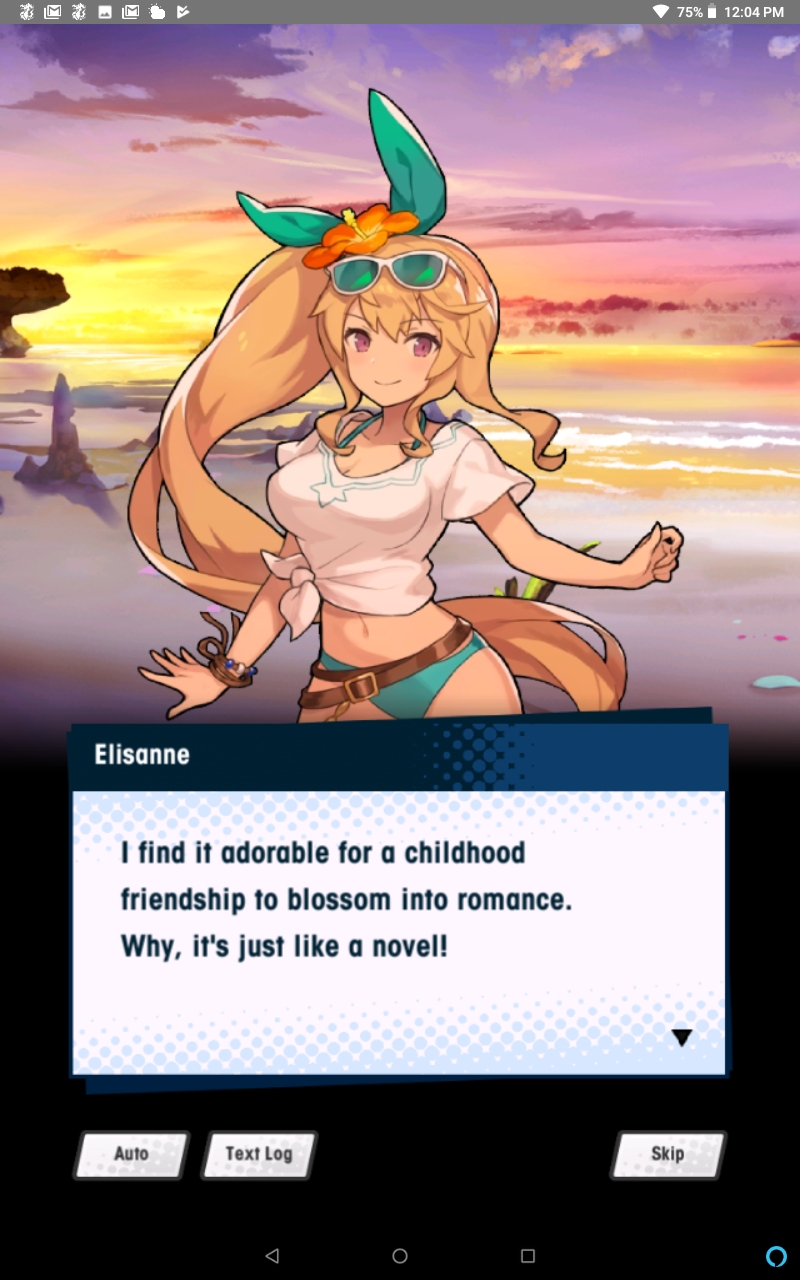
In a game like Granblue Fantasy or Dragalia Lost, it’s often assumed that if a new character comes out for the player to recruit, that said character joins the main group. But looking at the story, that’s clearly not the case. Granblue Fantasy has a lot of characters, and a lot of people joke that there are like 200+ people on that airship (the Grancypher). I decided to group them up based on whether they are actually on the ship, and if so, how much? While this image is a bit more self-explanatory than yesterday’s, I’ll still describe it a bit:

  • Permanent resident basically means what it says: the Grancypher is their home, and serves as their main base. They won’t always be there – in fact, they might take long breaks – but that is where they come back to. Basically, they take their mail there. At least until they accomplish what they joined the crew to do in the first place, wherein they become Former Residents. So permanent isn’t forever, just for the duration of their personal adventure.
  • Temporary resident is like the Grancypher is their vacation home. It’s a place where they always have at least some of their stuff, but it’s not where “home” is. Or, it might be home, but they are gone so often that it might as well not be (I think most of the Society crew is basically here, though they basically leave Beatrix to be babysat on the ship).
  • There are some characters that don’t live on the ship, but show up often enough that they may as well be part of the crew. They always have a place, but they don’t keep their stuff there. Like a good friend, not family. Often these characters just happen to meet up with the crew often enough to become popular, or the crew actually goes to visit them every so often.
  • The “taxi” thing is for those people that just go along with the crew when they happen to be going in the same direction.
  • And then there are the characters that never even joined the crew. Even though they’re characters that you can pull from the gacha, and they might even be important to the story, they might never even step foot on the ship.

I went into this thinking there wouldn’t be so many permanent residents, though really I shouldn’t have. The lower-rarity characters are mostly older characters, when the storytelling was simpler and less confident, and people would just join up for the flimsiest of reasons. And those characters would just basically join up, and that’s the last we hear of them – they’re completely irrelevant from then on, unless they are somehow popular and get an alt. The ranks of higher-rarity characters include a lot of characters that come from events, which usually involve the crew going somewhere and things happen to other people, that the crew helps them with. This generally eliminates the need to introduce the character, so they can just get to a proper story for the character stories (which every gacha unit has). Since these characters are more memorable, they became over-represented in my mind.

I don’t have all the characters in the game up there. Some of the newer characters are absent, though I don’t think there’s anyone of particular note. I also didn’t know what to do with some characters, since I don’t have them (or haven’t read their character stories), so I just left them off. That includes all of the Oracles; I figure most of them become permanent additions to the ship (since they are pretty much all outcasts for one reason or another).

Also, I have to say that Tiermaker is a good site. It makes a way to present a lot of info in a concise and attractive manner. A picture is worth a lot of words, especially if you can put words on that picture. There is a definite risk that this will become cringe delivery, like demotivators did, but we’ll cross that bridge when we get to it. I have at least one more GBF lore thing I can do with it, just off the top of my head (I could do a roles thing like I did with Dragalia Lost, but I think it’s redundant, since they are so much more clear, and the story actually uses them when relevant).

Dragalia Lost: Character Roles

I’ve written previously on some of the issues that Dragalia Lost has with its story, especially how much potential is wasted. Well, here’s some more. There are all these characters, and yet so very few are used in the story at all, particularly the main story. So here I’ve sorted them out into their various story roles, as I see them. At least roughly. These are distinct from the gameplay roles the units have, as that’s a lot simpler and sometimes completely different.

As it wouldn’t be much of a blog post if I didn’t have any discussion, I’ll give some explanation, since the categories are sometimes a bit weird.

  • General basically means leader of lots of soldiers. I’m sure most of those up there aren’t actual Generals, but you know, heads of state actively leading armies is close enough. Also included were the leaders of knightly orders like Eli (leader of all the Paladyns) and Lief (head of the main knightly order of Alberia), since I figured that’s close enough.
  • Knights and Fighters/Warriors is admittedly a bit of an arbitrary distinction. I figured knights were the fighters that also had more minor leadership roles, especially if they were elite warriors, or otherwise distinguished. Characters described as junior knights in-game I listed under Fighter for that reason. Knights also include trainers like Celery or Raymond.
  • Mage is pretty much what you’d think. It includes, but is not exclusive to, battle mages. Fortune tellers count as mages I guess.
  • I included all the ninja characters under Assassins, because that’s what ninjas are supposed to be (and that aesthetic continues in this game), even if those characters are theoretically in the bodyguard role, protecting against possible assassins.
  • Researchers includes everything from lecturers to mad scientists. Basically the nerds.
  • I put Catherine under Merchants because I figured she was rich for a reason, and I didn’t want a category of one otherwise.
  • Adventurers are like your typical RPG PC – someone who travels around doing various things for various reasons, often taking jobs from various people. Most of the characters described as mercenaries fall here. If a character just travels looking for fights, I put them under Fighter, though.
  • Treasure Hunters are different from Adventurers because they’re just after one thing: treasures. The reasons and means are different, but that’s what they’re about.
  • Entertainers includes any of the arts, in addition to just entertainment. So we’ve got a painter, a writer, some dancers, and even a fireworks guy.
  • Servants include all sorts of domestics (like chefs), as well as bodyguards and couriers.
  • I separated out Detective, since that seems like a very particular role of investigation + pursuit + fighting, all in one profession.
  • Civilian is a broad category. Mostly it’s just random NPC-types, villagers for the most part. Basically people that would have no real job in a RPG party. Includes everyone from random kids to dispossessed nobles that don’t have any particular skill. Surprised this category is so large, since this is an RPG after all. But as I said, the gameplay is divorced from the story pretty heavily here, and the characters can have fun stories separate from the main story.
  • Dragon was just for those role-less dragon characters. (Faries count as dragons I guess).
  • The Fire Emblem characters were hard to categorize. They’re hero characters in their own games for the most part, and I guess fill other roles there. But here they’re just kinda there, fighting Euden’s enemies, without their normal crews. Very odd.

Continuing

Today’s Blaugust prompt is from JamiesVlogUK:

What piece of content would you most like to have a sequel or reboot?

There are two easy answers for me. The first, as you might have guessed from the top picture, is Deus Ex. That needs another sequel. Or rather, Mankind Divided needs to be finished. Squenix thought they could jump onto the “episodic” game bandwagon, and deliver, at most, 2/3 of a story, with some added multiplayer game modes to keep the players satisfied. This didn’t work. No matter how good that piece of a story game it is, it’s not complete, and this time the players didn’t bite. Which led to Squenix basically cancelling the series. Which sucks, because Mankind Divided was the first Deus Ex sequel to even come close to the first game.

The second is going to be a little different: Star Trek. Star Trek needs to be rebooted. But, you might say, it’s been rebooted once, maybe twice in the last decade or so. True, but it’s all sucked, and sucked hard. Only the first reboot film, in 2009, at least managed to be fun while sucking, which means watching it wasn’t a chore. Maybe Lower Decks can bring back the feeling of real Trek. (I hear the latest episode might actually be decent; the clips I’ve seen are funnier themselves than the last two episodes put together, at least.) But I want a return to form: sci-fi shows set on a military space thingy where the future is hopeful, but weird and dangerous stuff happens. Also having good writing and characters would be good too. We don’t have any of that now.

This is a great image.

Bang Dream Band Profile: Poppin’ Party

Poppin’ Party could be considered the “main” band of Bang Dream. They’re the first band you meet, they’ve got the most story, and really they’re the reason the game even exists (Kasumi’s voice actor was already doing music for the company, so they decided to make a game about girls’ bands.) As such, they’re probably the least-defined band out of the bunch. Musically, it’s all over the place: they’ve got some rockin’ stuff, but also some really sugary pop stuff. If you’ve ever listened to K-On’s music, HTT is a good match for Poppin’ Party (PP) (it wouldn’t surprise me if the characters are a good match too; the two bands have a lot in common…).

To tell the story of PP would be to tell the story of the game, so I’ll quickly summarize. Kasumi follows a trail of stickers into Arisa’s house (yes, into her house), which doubles as a pawn shop. Inside the shop’s storage there’s a Random Star guitar; Kasumi, who’s obsessed with stars (the stickers were star stickers), must have this. And what’s the point of having a guitar if there’s no band? So Kasumi, despite never having played before, strongarms a few weaker-willed individuals (like Arisa) into her band. Of course they aren’t any good at first, but they have passion, and that’s what counts in anime. They eventually become a sort of “mascot” band for their neighborhood, and the local concert venue.

And now for the girls:

Kasumi Toyama

Kasumi, the leader and founder of Poppin’ Party, is, to put it simply, a complete idiot. She’s the girl version of a typical shounen manga protagonist: bad at school, headstrong, loud, brash, stubborn, friendly to a fault, full to overflowing with energy, rushes into things without thinking, and comes up with all sorts of silly ideas. Being an idiot, she often doesn’t realize how difficult things will be, until she’s hit some point of discouragement, where she falls apart. But being simple, she’s easy to put back together too, and gets right back up to try something else. She’s also got an almost irresistible force of will, which helps her get her way more often than not, when she can’t give good reason for a thing.

Kasumi is both the vocalist and rhythm guitarist for PP. She’s the only one who had no experience whatsoever with her instrument, so she’s the one that had the furthest to come. However, if nothing else, she has determination, and she puts in the effort to get to an acceptable level. She is also the main lyricist, which explains why the songs are so all over the place musically – she basically goes with her whims.

Arisa Ichigaya

Arisa is about the exact opposite of Kasumi. Where Kasumi is the Fool, Arisa is the Straight Man, in traditional manzai comedy fashion. Arisa is incredibly smart, top of her class, despite rarely coming to school (because she had no friends, so why bother?). Arisa pretty much just wants a normal, quiet life, but then she always gets caught up with a bunch of weirdos and antics. She tries to keep her feelings to herself, but she’s as easy to read as Kasumi, and often ends up blushing when caught trying to act cool. Sche puts on airs of being a proper young lady, demure and polite; despite that, she doesn’t suffer fools well, and often has outbursts when crazy stuff happens – usually aimed at Kasumi, the likely cause of such crazy stuff.

Arisa is the keyboardist for the band. She learned how to play piano as a child, but she hasn’t kept up with it. She’s the type that always likes to be extremely prepared and in control, so her lack of skill is always nervewracking, on top of her usual shyness. She also acts somewhat as the manager for the band: Kasumi is always half-planning stuff, and Arisa likes to be sure in every detail, so she takes care of those things. (Also doesn’t hurt that her basement is the home base for the band.) While she doesn’t like to admit it, she really cares for the band, and goes the extra mile for them.

Rimi Ushigome

Rimi is just one giant ball of anxiety in a small frame. She’s extremely shy, quite nervous, and takes a long time to make decisions for herself. So naturally, she got swept up in Kasumi’s tornadic energy. She’s also kinda dumb, which doesn’t help matters (though not anywhere near Kasumi’s level). However, she likes what she likes, and is very willing to let everyone know: chocolate coronets, horror movies, and music.

Rimi is the bassist for the band. Her older sister is the bassist for another band (Glitter Green), who taught her the basics on how to play. Even so, she’s not too skilled at the start, and much like Arisa, gets incredibly nervous during performances. Even so, she was the first one to say yes when Kasumi wanted to form a band, and is always excited for both practice and performances.

Tae Hanazono

Tae can be summed up in one phrase: space cadet. She’s never really all there. Sometimes she seems like a complete idiot, while others she’s the wisest one in the room. Usually the former, though. She’s always ready to go along with Kasumi’s ideas, often confusing the situation even more (much to Arisa’s consternation). If ever there was a non-sequitur that didn’t need to be said, she’s there to say it – usually about rabbits.

Tae is the lead guitarist for PP. She’s the only band member who’s particularly skilled with their instrument, having played guitar since she was a child. However, she never joined a band before PP – she preferred to watch; in fact, at the start of the game she’s working for a concert hall. She joins PP after tutoring Kasumi for a while, convinced that there was something special with her, some special feeling with the band.

That’s not what the fanfics say…
Saya Yamabuki

Saya is the Normal One. While Arisa tries to be normal, Saya actually is. In fact, she’s so normal, I don’t have much to say about her. She’s not dumb or smart. She’s grounded and centered. But she doesn’t really perform any role in the dynamic of PP. She’s just kinda there being pretty. Her parents run a local bakery, which means she’s often left taking care of her younger siblings. In fact, this makes her the last member of PP to join up – she felt her family responsibilities would interfere with the band.

Saya is the drummer. She was actually a drummer for another band in the past, but she quit after a family incident (which, again, made her extremely hesitant to join with PP). Her role in the band mostly seems to be getting treats for parties and practices. It’s funny, she basically gets an event that’s all about her, and yet she still doesn’t make much of an impression to me.

Dragalia Lost Chapter 15 Review

(Naturally there will be spoilers, especially for the most recent main story chapters.)

Sometimes you can have a good story, but it’s undermined by poor writing. The opposite can also be true – a bad story can have good writing. Today we’re going to look at an example of the former, in the newest addition to the main story.

To bring everyone up to speed, all you need to know is that The Great Evil, Fantasy Satan, (officially, The Other) was defeated, and Zethia was saved. Except then she was kidnapped pretty much immediately, and now Euden and friends going to get her back (conveniently, the kidnapper told them where to find her). Turns out that said kidnapper, Nedrick, is the boss of the Agito (the super-powered bad guy group of evil), has it in for Euden.

Now the big reveal comes (to Euden – the players have had this information for months): Euden isn’t the natural-born prince, but was adopted after the king’s seventh child died soon after birth. There’s some other stuff too, like Valyx (one of the other princes) gets turned into an Agito temporarily, everyone gets beat up by the agitos, and so on. But the big deal is supposed to be how everyone, and particularly Euden, reacts to the fact that Euden isn’t who he thinks he is.

Naturally, pretty much everyone except Euden is fine with it, because they are his friends. Euden is at first shocked, as one would expect, but he eventually gets over himself and gets back to work.

My overall reaction is a big Meh. There isn’t any real revelation here that we didn’t already know. There’s no big character stuff that we couldn’t already guess. There isn’t even a whole lot of character drama, besides what I’ve shown above. As far as worldbuilding goes, the only thing we get is the reveal of the last Agito in-game, and just what is up with them (the masks are magitech that brings out base emotions while simultaneously really buffing their stats.- basically turning people into monsters).

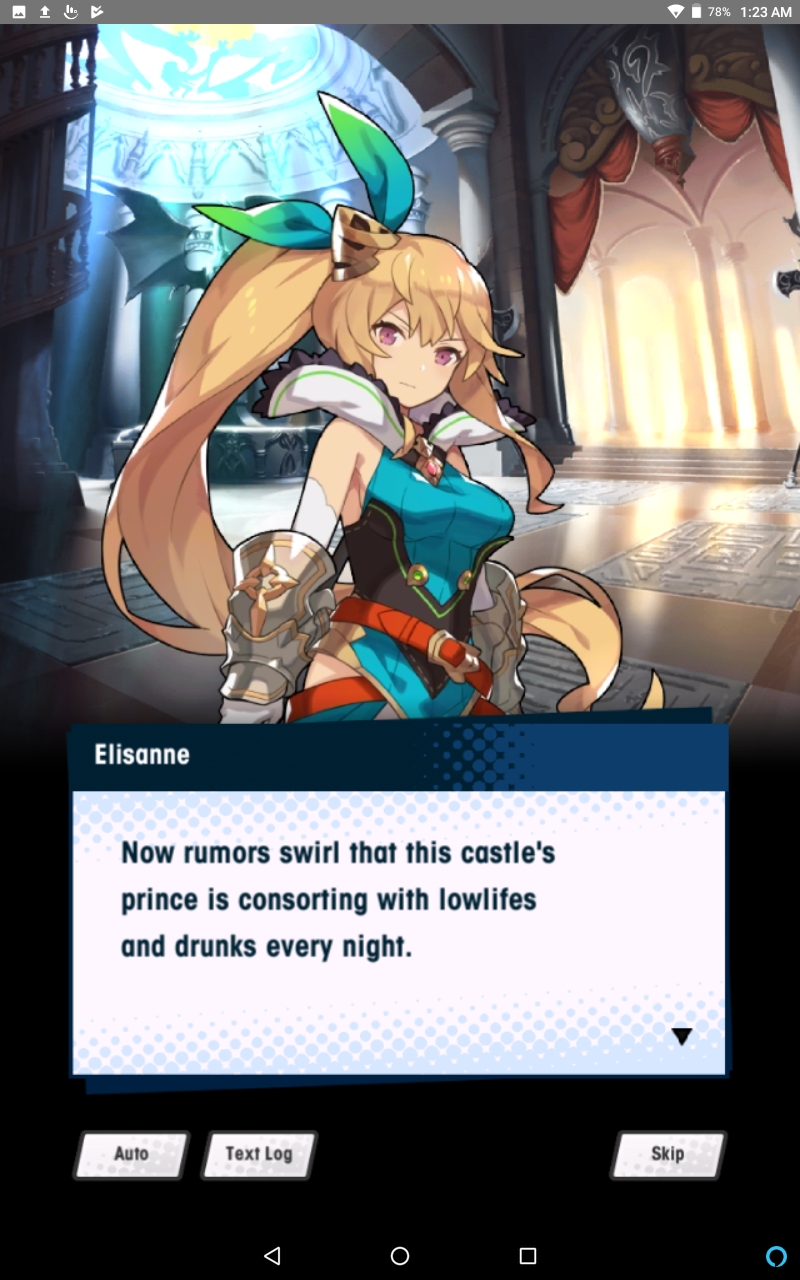
That, and there were two bits where the writing really took me out of it. The big one was during the reveal – why would anybody as smart as Nedrick (who had everything figured out) think this would change much. Sure, being told you’re adopted, when you thought your parents were your birth parents, is a big deal. But that doesn’t effectively change anything here: as Euden correctly points out above (though he does it to himself, when he should be saying it out loud), he’s got the dragon blood, so no matter what, he’s in. And, from Nedrick’s (and everyone else’s) point of view, he was officially adopted anyways (says so right in that book), so he’s got claim as much as anyone else. All the official stuff he’s done is just as legitimate as it always was. And all his friends there literally heard Alberius – the founder of the kingdom – tell Euden that he was the true heir to his power. And of course, that doesn’t change how his siblings feel about him – the older ones presumably know, and Zethia is the last person who would care (and now it’s not incest anymore…). As we see, Nedrick’s plan isn’t to usurp Euden’s place, even he did want to kill him, so I don’t see the point.

Second, back earlier Ciella tried to sow conflict in the heroes by implying that Eli had a secret that could ruin their friendship (it’s that she already knew about Euden’s situation, that’s all). As if friends didn’t have secrets from each other. This is a thing that comes up a lot in media for teens (or is written like such, as many jrpg’s are). The fact that this worked, even a little, upset me a bit, and took me out of the story. In a somewhat smart move by the writers, Euden at least dismisses this, saying that Eli will tell them in her own time, but it’s not important at that moment. Of course, if the writing were actually good, someone (I’d say Shanon, both for in-character reasons, and because she’s the one that got the idiot ball here) would point out that even friends keep secrets from each other, and that’s perfectly ok.

(We also have the fact that Brunhilda forgets she’s a dragon, and jobs in her human form; but that’s usually the case, so I’ll just ignore if for now.)

So yah, pretty middling new chapter that didn’t live up to the hype. Though I guess they never do. Even though there were a few easy fixes to the writing, overall this is basically a filler arc, right before the start of the next part of the adventure.

Missed Story Potential: Dragalia Lost

Dragalia Lost is one of those games I really like for some reason. I’m not terribly good at it, and it’s not the best game, even in its genre, but still I keep with it. I think it’s mostly due to the story. There’s just something quite charming about it.

Not to say that it’s particularly good or anything; it’s not winning awards anytime soon. And that’s a shame. I know story is just an ancillary thing for this sort of mobile game – this one actually has gameplay – but the devs think it’s obviously still important for the fans, since they’ve put more of a focus on getting more story out, and faster. But…it leaves something to be desired. With just a little more depth, a bit more thought than the basic jrpg tropes, especially in the main story, and it could be something really special here.

To put it simply, the game’s protagonist (Euden) is the seventh child (of eight) of a good king. Said good king dies at the beginning, after getting possessed by The Great Evil. The Great Evil (not it’s name, just what it is) then possesses the younger twin sister of the MC, Zethia, who also happened to be the figurehead of the local dragon-worshiping religion (ie, the fantasy pope gets possessed by the fantasy devil) – and therefore is not a potential heir to the throne. Then said Great Evil decides she/it is going to take over the kingdom, and does – and renames the kingdom from Generic Eurofantasyland to The Evil Empire.

Right there, there’s something potentially interesting. See, one needs to have a claim on the throne, in order to claim the throne. (At least politically.) Zethia had no claim, so she has no authority to claim. Now, being The Great Evil, she has phenomenal power, and that creates an authority of its own. But that power needs to be demonstrated first. From all that we can tell, Zethia just walked onto the throne and claimed it, no opposition (besides from Euden’s little band, who’ve been branded as kingslayers – one of the few things the story gets right in this area). Not only did Zethia not have any claim in the first place, but she’s also the eighth child of the king. What about the other six or so? We quickly learn (and it makes sense) that a few don’t care about ruling, or are otherwise unfit to do so. But that still leaves at least one, and probably more, that should contest this – most notably the oldest, who naturally was assuming he’d be the next king (and has the ambition and ability to do so). But no, we see all of Euden’s older siblings simply fall in line, and none of the nobles dispute such a breech in propriety. Oh, and no one seems to really care that Zethia, the Fantasy Pope, remember, renamed the kingdom to basically be The Evil Empire – the evil world-conquering empire ruled by and worshiping The Great Evil, whom the kingdom’s founder vanquished. No big deal I guess – even to the religion she’s the head of, which is specifically opposed to said Great Evil.

And that just takes into account the internal palace politics. What about the international scene? At least the game takes some time to flesh out its world a bit: there are the not!forest elves (Sylvans), who nominally are part of this kingdom, but not really because they all live in the inpenetrable woods (and are thus exotic to humans – except for all those generic Slyvan NPC’s that show up in town scenes all the time); the other generic Eurofantasy kingdom to the north that is apparently somewhat hostile but not really since we get some of them as gacha characters; the not!Venice merchant city-state to the west; the not!China somewhere to the east (but not too far east); and the not!Japan, also not too far to the east. How do all these react to this turmoil? Asides from the not!Venice, we don’t really know – and even in this case, we only know something because the MC asks for their help, for an alliance.

And then there’s the issue of Euden and his band. At the beginning Euden and friends find an abandoned castle – abandoned, because it was hidden in a magic forest with magical mist. They use this as a base to harass the Evil Empire, and to help the various people messed up by said Evil Empire. Eventually there’s a sufficiently-large amount of refugees that Euden actually is able to declare independence from Evil Empire. What comes of this major event? Not a whole lot. Besides going to not!Venice to get an ally, things just proceed in typical JRPG fashion: save villagers from monsters or The Evil Empire, go to parties, throw parties. entertain foreigners, fight off the occasional Evil Empire patrol, and so on. The game’s story rarely uses the fact that Euden is a ruler to much effect. Sometimes, late in the story, he commands an army, or something, but generally he’s just a jrpg protagonist going around with his jrpg party gathering allies. And of course there’s the typical gacha stuff where he interacts personally with just about every character, in a manner befitting a jrpg protagonist, not a ruler (they say king; but duke, or maybe even count, would be more appropriate).

In just these few worldbuilding, political areas, the game somewhat falls flat. And it’s a real shame, because this isn’t just another typical jrpg (or even western rpg) story. They could have actually done something special here, but they didn’t even think out the implications of events in their own story. And that’s the real kicker – I think a lot of people look down on mobile rpg stories because the stories tend to do this. It seems most stories aren’t written by proper writers, but by people high up on the dev team – often the directors themselves – and that can lead to these situations where there are good idea seeds, but the seeds aren’t allowed to grow and mature, at least not properly (tonight’s story update is probably going to be a good example of this, but that’s spoiler territory). It’s just lost potential.

A Pre-History of the Deus Ex World

As I stated long ago, I made up a little bit of a history to the world of the Deus Ex games. Yes, I know they’re supposed to be “our world,” but obviously things haven’t happened as they said they would in the games. But even considering that, there’s a lot of the “behind the scenes” stuff that isn’t necessarily what happened in our real history, that would matter to the world of Deus Ex. Naturally, all that follows is my own creation, basically a bit of fanfiction.

  • 1919 – During the negotiations to form the League of Nations, a group of world leaders and major businessmen come together to form the Illuminati – a group to guide the future of mankind to a better, and thus more profitable, place, where major wars would not disrupt the general progress of mankind. The world would become a more united order, the people losing the dangerous differences of racism and nationalism, but instead become a block of consumers and workers. Both the United States and the Soviet Union reject this plan. The Soviets create their own (less) hidden guiding order instead, modeled after Marx’s ideals. In America, however, there is a lot of support for the Illuminati.
  • During the Great Depression, the Illuminati are able to install a series of puppets in the United States, up to the president, Roosevelt. However, their fortunes are reversed in Europe, where Germany, Italy, and Spain all break free from Illuminati influence. The Fascists, however, do not form another secret block; Hitler instead chooses to go the old-fashioned route of alliances, diplomacy, and war.
  • After WWII, the Illuminati and the Soviet block consolidate their power. Between the two, most of the nations of the earth fall under the influence of some secret society – pretty much everything besides Africa. It pretty much follows the communist/not communist lines.
  • Until Nixon, that is. Nixon opening up China was really the Illuminati gaining control influence over the Chinese government. The Illuminati doesn’t really care what form the government takes, as long as it follows guidelines.
  • Speaking of Africa, that proved to be a huge problem for both the Illuminati and the Soviets. Both pushed anti-colonialism – new, weak governments are easier clients than a strong empire, after all – but Africa quickly became a mess. Africans weren’t interested in merely having new masters. And all the aid and bribes in the world couldn’t overcome the tribalism and corruption of these new, weak governments. It wouldn’t be until later that things settled down enough for the big players to gain a foothold there.
  • In the late 1980’s, the Soviet block fell apart. Authoritarianism and militarism couldn’t compete with globalist consumerism, neither economically nor psychologically. The Illuminati took over the structures the Soviets had put in place.
  • The rise of the Internet in the 1990’s greatly expanded the power and control of the Illuminati. It’s much easier to control the hearts and minds of a few prominent elite than to seriously influence the masses. The Internet allowed the Illuminati to directly interface with millions, and eventually billions. And of course, the data collected would create ever-better ways to reach said billions, individually, until basically everyone was constantly under surveillance.
  • Either patriotism, or the lack thereof, could be used to further the Illuminati’s ends. But both in the same country, in significant amounts, were a problem. America was in this state, with half patriots and half anti-patriots. This sort of soft cultural separation kept both halves on their guard. A crisis would be needed to either push one way or the other, or completely separate the two sides. Fortuitously, terrorists attacking New York City created that crisis for them; this created a clean cultural divide that the Illuminati could exploit, both against the world and against each other. Control of the internet would exacerbate relations on both sides, creating an easily-exploitable paranoia. Various plagues, foreign wars, and disasters would only increase this.
  • To add to this political turmoil, mechanical augmentations became a huge cultural phenomenon. First started with helping maimed soldiers gain full mobility, augmentations quickly became more and more advanced, to the point where not having them became a major disadvantage in pretty much every area of life.

How To Not Fail At Gacha

I’ve been playing mobile gacha games for a few years now. I’ve been paying attention to the various trends and what’a popular and whatnot for that time. Some of my most-played games fall into this category after all, and I think watching them in general is just a good idea. Over that time, I think I’ve seen a lot of what tends to work. And I’ve seen a few things that don’t work. So, in case any of those big game producers making a new game are reading this blog today, I’ll spell it out for you, and solve all your problems.

The first part is to know your audience. This might seem like a simple thing, but a lot of games go out there thinking their audience is EVERYONE! Sure, that’d be nice to have, but the reality is, not everyone will want to play your game, at least at first. “Everyone” is quite the accomplishment. But you should know that the typical audience for these sorts of games are adult males with jobs, especially those over 30, at least for new IP’s. If you’re one of the lucky ones with a licensed property, you’ll have your audience – though it will still be somewhat older, because you’re going whaling, and whales need money, serious cash. Like, hundreds of spare dollars a month to throw at your gacha. Kids don’t have that (and it’s also kinda scummy to market this sort of thing to kids, but that’s a secondary concern).

Once you know your audience, you know how to cater to them. If it’s adult males, as it most likely is, it’s pretty girls. Waifus, if you’ll pardon my misuse of weeb parlance. But, but what about cool guys?! Everyone loves cool guys, that’s why they’re the protagonists of so many games! Sure, they’re the protagonists. You can even make the protagonist of your game a cool dude. But you don’t draw protagonists from the gacha, typically. That’s a bad plan. Most dudes don’t want to spend money on dudes (unless it’s their birthday). They’ll spend money on women, though, even women they have no chance on being with (in this case, because the women aren’t even real). The gacha doesn’t have to be ALL girls, but it should heavily weigh that way. Remember, every time a guy draws a male character, unless that character is quite overpowered, there will be disappointment.

There, that’s it. That’s all you’ll need. Oh, and marketing. Lots and lots of marketing. No matter how awesome your game is, not matter how appealing your characters are, it won’t matter one little bit if no one knows about it. Word-of-mouth works, but those people have to get into the game first, in order to tell others about it. Fan artists are especially useful here. But again, if they don’t see your characters in the first place, they can’t make art of them and spread your message on Twitter for free. Even a big-name publisher won’t mean anything, if there’s no marketing. Mobile games are a dime a few dozen, and essentially disposable – getting your name, and art, out there will make you stand out from the competition.

Destroy All Humans: A Review

The short version: this is a good game. You should go play it. Well-worth paying full price ($30).

The long version: if you liked the original, you will like this. It’s basically the same game. Sure, the graphics are modernized, it’s got keyboard+mouse support, and even has a new mission (it’s a cut mission from the original files that’s been restored), but it’s the same game. They even used the same audio, so it keeps the humor that’s not allowed anymore (there is one line that’s taken out).

You might notice that it doesn’t quite look the same as before, besides the improved graphics and textures. The devs for the remake thought that these cartoony characters worked better for the tone of the game than the original’s more idealized depictions. I don’t really agree, but it’s a minor thing.

For those of you who haven’t played the original, this is a third-person shooter in the classic style. Meaning, this isn’t a cover shooter, there are no real stealth elements, you just go around shooting things. Well, you do more than that – since you have no stealth, you do your non-shooty bits by taking the holographic form of various humans. You can read their minds, which can give mission hints, but mostly they’re just fun (this also recharges your holographic disguise). You can pick up and throw things with your mind. You have a few different weapons (including an anal probe that causes heads to explode). You have a jet pack to do jet pack things. You also have a flying saucer to do more enhanced destruction.

Between missions you can upgrade all this stuff with the DNA currency that you collect. Which you mostly get by stealing people’s brains (thus the anal probe causing exploding heads). There are also hidden alien probes around the maps that also give you DNA. Every map can be revisited after/between missions to gather all the collectibles and do minigames so you can upgrade your stuff. (You can also just plain replay missions, to get optional objectives or whatever.) The game is pretty easy overall, but it’s the upgrades that make it so. (And you’re going to really want those upgrades for the few difficult parts of the game.)

I personally have played a bit over 13 hours to this point. In this time I did all the main missions, and have replayed several of the maps. I haven’t 100% any of them though. I’d really have to get a guide to find the last of the probes on some of those maps. But for now, I’m satisfied. The replayability is a major part of this game – sometimes you just have a need to destroy a town, and you can do that as many times as you want. I really hope this game is such a success that THQ decides to remake the sequel, which is an even better game than this one.

Social Combat? An Easy Stat Set For a Non-Combat Game

Most everyone (at least anyone who’d be reading this) is familiar with a basic stat set, as seen in games. I think the idea might have been initially popularized with D&D, but it has spread out to lots of other forms of games, even besides RPG’s. It’s just a convenient and concise way to describe a thing in comparison with others of a similar nature. They’re especially useful when the things in question are combat units, for combat games.

But what about non-combat situations that you still want gamified? That’s easy with a stat set, too. Many games (like the afore-mentioned D&D) use the same stat set for all sorts of situations. Many gamers are familiar with the basic setup here, even if it does differ from game to game. Even the abbreviations will be familiar to many: STR, AGL, PER, DEX, INT, and so on. Many of those can conceivably be used in non-combat, or social, situations. You just have to make up a system to deal with them.

I’m not going to be doing anything original here. I just want a simple stat set that can be used just for social situations. Like, say, a high school setting. You don’t need a Strength stat, or perhaps Endurance stat, in that sort of thing (keeping it realistic, I mean; if you’re going to do a combat high school, you might want those things!). Like I said, simple. And familiar, so folks don’t need a big explanation on what everything is.

Your “social combat” in such settings would, I think, be mostly concerned with persuasion: convincing someone to do something, helping them feel better, convincing them of your position, and so on. So, what sort of stats might we use? Seems like Charisma (CHA) is obvious to start; let’s say it’s a combination of looks, the air about you, how you carry yourself, and so on, that make people like (or dislike) you before interacting, and basically how likable they are in general. Perception (PER) to notice things that are going on. Intelligence (INT) to have knowledge and figure out solutions. Wisdom (WIS) to know what to say, and how to best say it. Stuff like that.

So, how can we apply these? Let’s give an example. Say your character wants to go to the beach this weekend, and is trying to convince their friends. Most people want to go, so that’s easy, but there is one friend that’s quite resistant. A high CHA difference might make this friend more desirous to please the PC. A PER check might spot a shaky hand, or a specific change in tone. INT might remind that there’s a test on Monday, and the friend is not doing so hot in this subject. Success with WIS might use that friend’s specific history to bring up something or another. (I think WIS is probably the best stat in this situation, so something must be done about that.)

My system would, again, be simple. Just a 1-5 scale, with 3 being “normal”. Since all the stats are pretty close to each other, something must be done. So, I’ll have another stat, perhaps a multiplier. We’ll call that Will (WIL). This is the sheer force of personality, stubbornness, leadership skill, etc, that represents how much a character can really get something done. I’m even considering this a multiplier stat, compared to an additive stat for the rest. This can let otherwise low-stat characters actually succeed in many scenarios. (I basically have the genki idiot/airhead from a lot of anime in mind with this., who tend to drive the action over their smarter, wiser peers.)

Of course all this could be ironed out, added to, modified, and completely blown up. It’s just an idea I had, because I like simple things like this. Makes life easier for me.

(This is born from an idea I had for describing the various girls of Bang Dream. I thought this was an easy way of describing their base personalities while simultaneously explaining why things turn out the way they do in those stories. Then I figured one could make an actual game out of just that, and here we are. Might actually use the stats in those blogs about the characters, but might not. We’ll see.)